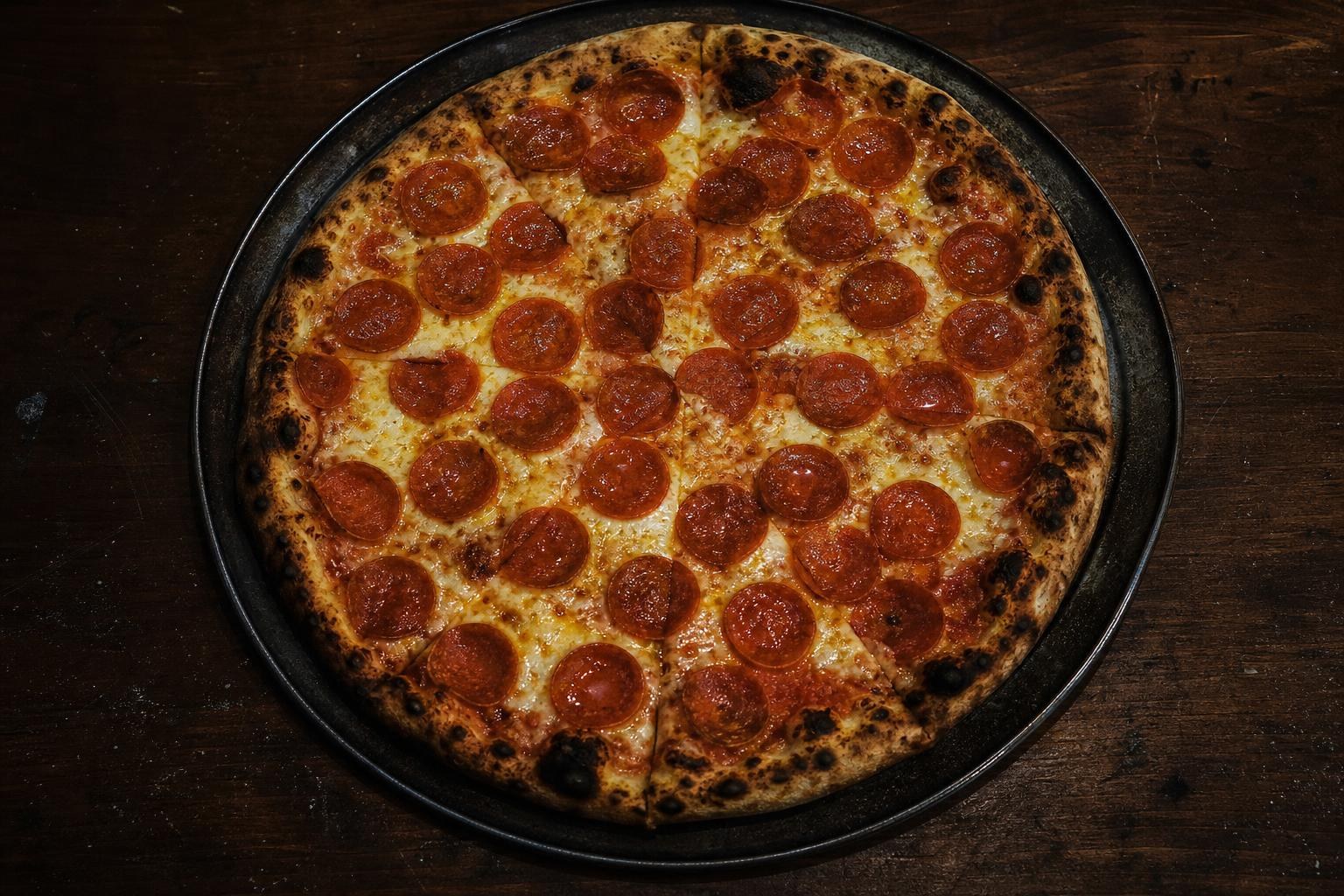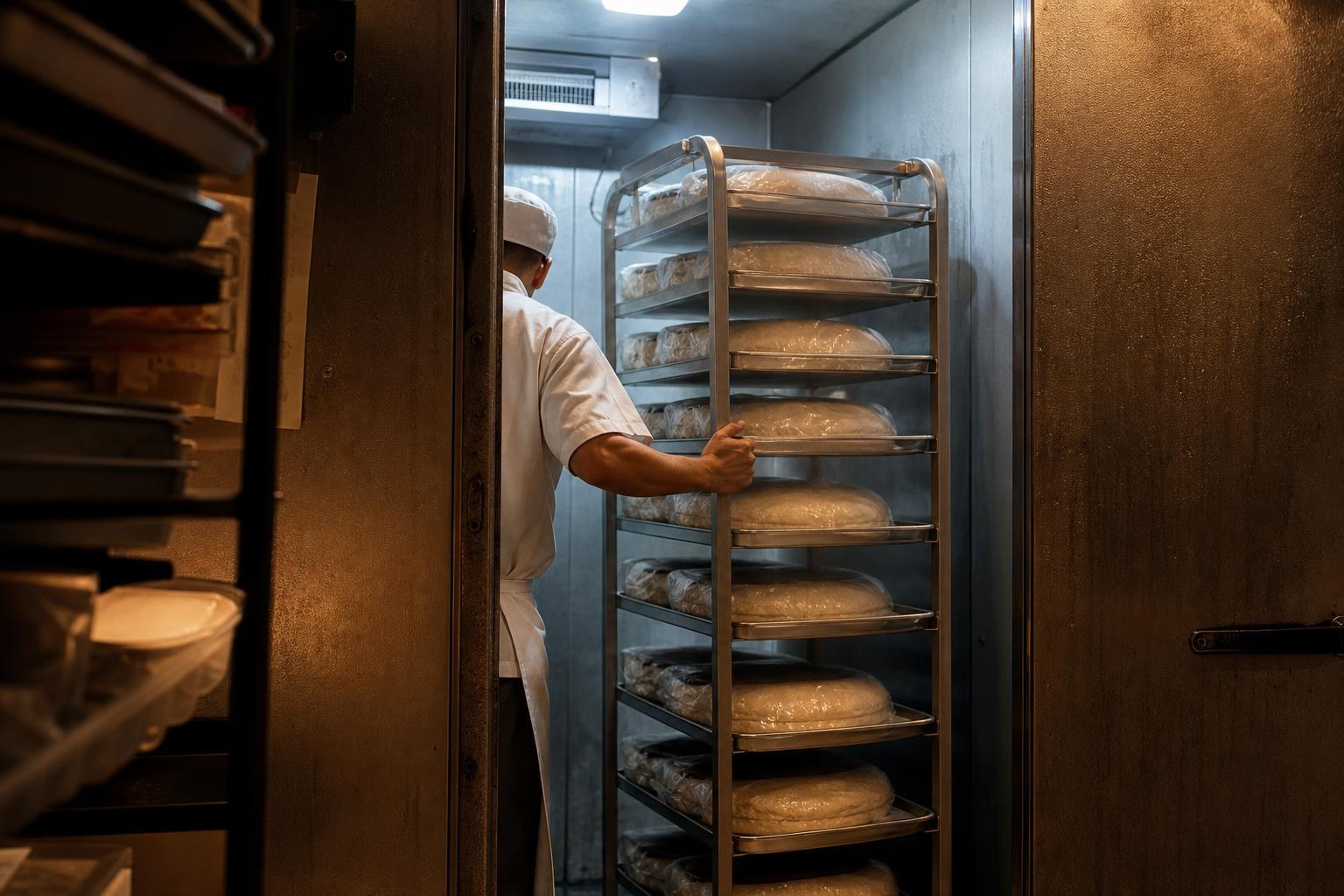

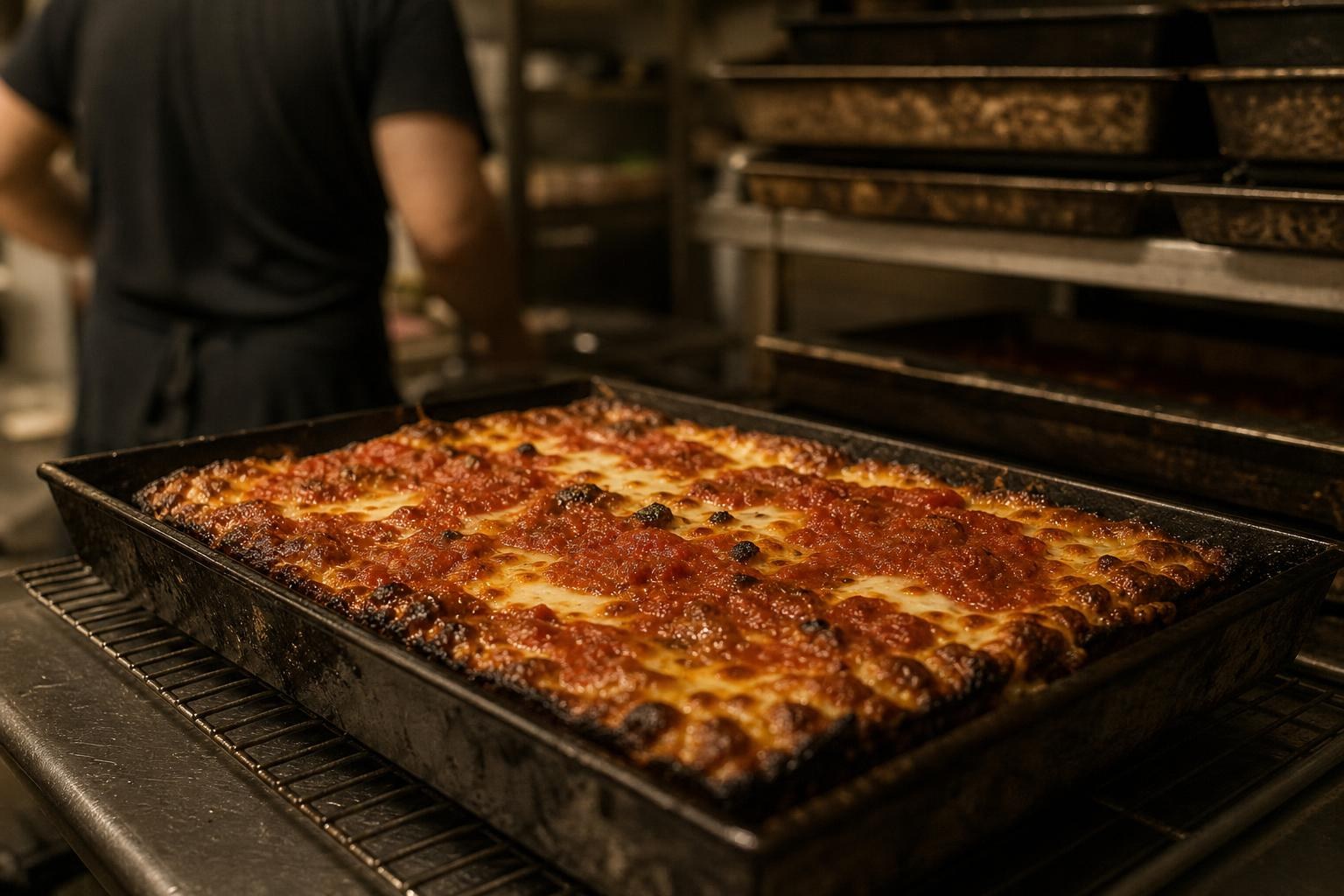
Detroit style just broke into the national top five and sits at No. 1 on the trending list, per Pizza Today’s 2026 Industry Trends Report — and in the same survey, more than 45% of operators said they’re interested in adding a new style to the menu. That’s the trap. When half the industry is eyeing the same move, the question isn’t whether Detroit is hot. It’s whether a pan program pays in your shop — and the answer runs through your ovens and your dough bench, not the trend charts.
The demand is real, and the chains already proved it
This isn’t a hype cycle running on food media alone. Datassential data reported by Nation’s Restaurant News put Detroit style on 0.6% of U.S. menus — a 183% increase over four years — with more than 80% of consumers who tried it saying they liked or loved it. Pizza Hut took it national back in January 2021, starting at $10.99, with its brand chief calling it “the fastest-growing trend in pizza,” and has since brought it back as a returning nationwide item. Via 313 rode the style to nearly 20 locations across the western U.S.
The craft side agrees with the market. At the 2026 International Pizza Challenge, Mirko D’Agata of Montreal’s Pizzeria No. 900 won both the Pan division and Pizza Maker of the Year — pan pizza wasn’t a sideshow in Vegas, it was the main event.
Note the caveat: that 183% growth figure is a low base compounding fast, and Datassential’s penetration read dates to late 2023. Peaking? The 2026 rankings say no — a style doesn’t break into the top five on the way down. But the easy first-mover press in your market may already be spoken for.
The pans are the cheapest line on the invoice
Here’s what surprises operators pricing this out: a 10x14 steel Detroit pan runs $26 bare or $36 seasoned from Detroit Style Pizza Co. A working fleet of 50 pans is roughly $1,300–$1,800 at those unit prices. That’s the whole “equipment cost” story — if you already own the right oven. Pizza Today’s Detroit guide is specific: the style is baked in deck ovens, in 8x10 and 10x14 steel pans, and “training your kitchen staff to properly use deck ovens is critical”. If you’re a conveyor shop, this isn’t a pan decision anymore; it’s an oven decision, and the math changes by an order of magnitude.
No trade publication we can find has published an all-in benchmark for what a pan program costs a shop to launch — pans, proofing space, cheese SKUs, training hours, menu redesign. That number doesn’t exist in print. Build your own before you commit.
The dough system is where pan programs die
Detroit dough is not your round dough pressed into a rectangle. Pizza Today’s technical guidance calls for 68–72% hydration — wetter than most NY-style doughs — proofed in the pan to a rise of an inch to an inch and a quarter, on a clock that swings from 30 minutes to 120 depending on a 10-degree temperature shift. The traditional cheese is Wisconsin brick, often blended with cheddar for the caramelized edge — a new SKU your distributor may or may not stock reliably.
That proof window is the ticket-time story nobody prices. A round pie stretches to order; a Detroit pie only exists if a pan was proofed hours ahead. You’re forecasting demand by daypart, par-proofing into it, and eating the misses. Under-proof and you 86 the style at 7 p.m.; over-proof and you’re binning high-hydration dough you paid labor to mix.
The pan costs $36. The program costs a second dough system and a proof window you don’t control. Price the second thing.
Three conditions under which it pays
One: your decks have headroom at peak. Detroit competes with your rounds for stone space at the exact hour you can least afford it. Two: your bench can run two dough systems. A separate mix, a separate proof schedule, and a cheese SKU is a systems commitment, not a recipe. Labor is already running 23–28% of sales with wages up 3.86% — a sloppy second system lands straight on that line. Three: the style is genuinely scarce in your market. With 45% of surveyed operators eyeing new styles, being fourth to Detroit in your zip code is a margin project with no press attached.
Miss any one of the three and skip it — or scratch the itch with a weekend-only special before you commit a menu panel to it.
The Weekly
Get the weekly operator brief.
The sharpest pizza-industry intelligence of the week — what changed, why it matters, and what operators should do with it.
Free. One email a week. Unsubscribe anytime — no hard feelings.
The honest limitation: there is no published data on how pan programs perform inside existing shops — no attach rates, no cannibalization figures, no failure rate for style additions. The trend data measures the style, not the retrofit. The number to watch is next year’s trending list: if Detroit holds the No. 1 slot for a third cycle, this is a durable category. If Sicilian or grandma overtakes it, the smart money was on pan capability — not on any one rectangle.